Blog :

What Are You Made Of?

What Are You Made Of?

We spend a lot of time talking about what we should avoid eating: sugar, processed foods, saturated fat, calories…

But protein is different.

Protein is one of the few things that most of us, especially as we age, might want to eat more of.

Our bodies are mostly water. But strip away the water, and nearly half of what remains is protein.

Unlike carbohydrates and fat, which have “savings accounts” for storage, protein is “installed” in you. Our muscles, skin, enzymes, and connective tissue are built from protein. It’s one of the main materials our bodies are physically made from, and our bodies depend on the protein we eat to maintain and rebuild those tissues.

If you don’t eat enough protein, your body will often pull from the one place you can least afford to lose: muscle. Tissue repair, recovery and even your immune system can be affected when protein intake is low.

And if you’re trying to lose weight, protein becomes even more important.

Whether someone is losing weight through traditional dieting or with one of the newer GLP-1 medications, the goal shouldn’t just be losing pounds. We also want to protect as much muscle and strength as possible while the weight comes off.

So, how much should we eat and what food sources have substantial protein?

Exact recommendations depend on your size, activity and goals, but the general range is 80-120 grams per day. Personally, I aim for about 40 grams per meal.

Some easy examples:

• Greek yogurt: 15–20 grams

• 3 eggs: about 18 grams

• Protein shake: 25–42 grams

• Palm-sized serving of chicken or fish: around 30 grams

Meanwhile, a bowl of cereal, toast and some orange juice may only provide about 10-15 grams of protein, about 1/3 of what my body needs! You can see how easy it is to get behind.

Protein matters.

🎯 Your Takeaways

  • Include quality protein every time you eat.
  • For just today, track your total grams of protein intake. Results may surprise you.
  • If you struggle getting enough, try a protein shake. I prefer “Premier Protein”.

PS: If this made protein finally make sense, forward it to someone who still thinks protein is only for bodybuilders.

Train Smart. Smile Often.

—Rich Roe
Join the Abs to Zen Newsletter
Recovery=Results

Recovery=Results

Your workout doesn’t make you stronger.

Recovery does.

The workout is the stimulus. The improvement happens later—when your body repairs, rebuilds, and adapts.

Our bodies are incredible machines. Right now, without us consciously thinking about it, our bodies are moving oxygen through the bloodstream, regulating temperature, digesting nutrients, repairing tissue, rebuilding muscle, strengthening bone, fighting off disease, and constantly adapting to the stress we place on them.

Every workout, hike, swim, bike ride, or pickleball match sends a message to the body: “Prepare me to handle this better next time.” And remarkably, the body responds. It works behind the scenes to repair, rebuild, and adapt in ways most of us rarely stop to appreciate. We are all owners of one of the most advanced and resilient systems on earth.

Recovery is not about “hacking” this system. It’s about supporting it.

Think about rush hour traffic. Even the best car in the world struggles when every lane is packed, exits are closed, construction is everywhere, and traffic grinds to a halt.

Our bodies are similar. Poor sleep, nonstop stress, dehydration, inactivity, and constant stimulation create roadblocks that slow recovery and adaptation. Sleep, movement, hydration, nutrition, and moments of calm help clear the lanes.

Sleep is your #1 recovery tool, yet many of us treat it like leftover time.

Research consistently shows poor sleep negatively affects:

  • Recovery (results)
  • Energy and motivation
  • Injury risk
  • Aches, pains and morning stiffness
  • Appetite control
  • Long-term health

Active recovery matters too. Sometimes the best thing after a hard workout is an easy walk, proper hydration, some good food and maybe a little stretching. Recovery is about supporting your body, not giving it more hard work.

You have just this one body, and it’s absolutely amazing! The better you support its natural ability to recover and adapt, the better it can support you.

🎯 Your Takeaways

1. Set an alarm 30 minutes before your ideal bedtime to start winding down and getting ready for sleep.

2. Start and end your day with a few minutes of slow breathing, meditation, or simply stepping away from screens.

3. Take a short walk after dinner, stretch while watching TV and keep an insulated glass of ice water on hand.

Train Smart. Smile Often.

-Rich Roe

P.S. I am looking to grow my subscriber list. If you can think of 1 person, please share this article.

Join the Abs to Zen Newsletter
HIIT Cardio

HIIT Cardio

HIIT Cardio

You don’t need more time for cardio, you need a few minutes of the right kind.

I love all forms of cardio, and each has benefits. Our bodies adapt to the stimulus we give them, so a variety is great. The key is to make sure your training aligns with your goals.

What I want to share is what type of cardio is most linked to longevity. Assuming you’re already doing some basic cardio and are cleared for exercise, I’m going to challenge you.

I’m talking about HIIT; short bursts where you push out of your comfort zone—followed by enough recovery to do it again.

“High intensity interval training”, or HIIT, will improve your body’s ability to use oxygen when it matters most. It strengthens your “engine.” And that engine—your heart, lungs and how well they work together—is one of the strongest drivers of longevity.

While interval training has been around since the 1930s, a researcher in Japan, Dr. Izumi Tabata, did some studies in the mid-1990’s that impacted the fitness world. He worked with high-level athletes, pushing them to maximal effort bursts of 20 seconds followed by only 10 seconds of rest, repeated 8 times.

Brutal.

That’s the origin of what we now call “Tabata workouts”.

Not only are the cardio benefits substantial, but the research also showed a small increase in caloric burn after the workout. You can imagine how the US market received that news! While high intensity training can slightly benefit those looking to lose weight, let’s stay focused on the long game of health and longevity.

After many more years of research and experimentation, the data is clear: most of us would benefit from doing some higher-intensity cardio. The classic HIIT uses repeated intervals, but I also like to add in some slightly longer, steady pushes.

You don’t need to train like a professional athlete. Just get out of your comfort zone once or twice a week for 8-20 minutes.

🎯 Your Takeaways

  • Pick any HIIT-style workout (Peloton, YouTube, or other apps). Look for ones that have you doing 20-40 seconds “on”, then recover until you can speak in full sentences. Repeat for 8-12 rounds.
  • Near the end of a regular cardio session, before your cooldown, add a 4-minute hard and steady push.

Train Smart. Smile Often

-Rich Roe

P.S. You are one of my founding members, and I really appreciate you being here early.

If you know someone who might enjoy this, please forward.

Join the Abs to Zen Newsletter
I’ve Fallen and I Can’t Get Up

I’ve Fallen and I Can’t Get Up

If you are old enough to remember that commercial, this week’s newsletter is for you.

In 1989, LifeAlert launched this campaign ad featuring an older woman who had fallen and needed help. I was only 23 years old, and my friends and I laughed at it. It had NOTHING to do with us. Now at 60, while serious injury from falls is still relatively low, issues ramp up quickly in just one generation.

Here is a scary stat…

Death rates from falls per 100K people:

o 19 for ages 65-74

o 75 for ages 75-84

o 300 for ages 85+

While being older often coincides with increased balance challenges, age itself is not a direct factor. By understanding specific causes, we can take proactive steps.

Three key factors associated with decreased balance:

1. Loss of Strength

2. Nervous System Decline

3. Loss of Mobility

Vision, inner ear changes and medications also play a role, but let’s focus on the ones we can train.

Let’s quickly explore each of the key factors.

1. Strength. If you’ve read any of my other newsletters, you will see that strength training shows up a lot. If you aren’t strong, not only are you more likely to fall, but you are more likely to get hurt, and recovery will be slower. You don’t need a full program to start-just a few minutes can make a difference.

2. Nervous System. Your nerves and muscles work together, so an issue in either one has consequences. The analogy I like to give my clients is that our nerves pathways are similar to trails. A well-used trail is wider, smoother, and you can move quickly on it. Without getting too technical, when we train our neural pathways, they can send messages more quickly. The result is better reaction time and balance.

3. Mobility. Did you know that if your calf is tight, it can affect how you walk and squat, and has a direct impact on your balance? Tight hips can be a problem too.

Good news, balance isn’t just something you are born with. Also, it’s much harder to improve the longer you wait. Now is a great time to help yourself.

🎯 Your Takeaways

If you do nothing else, try these:

1. Stand on 1 leg (30 seconds each side). Build to eyes closed or turning your head

2. Bird Dog (slow and controlled). Opposite arm and leg, hold 30 secs each side

3. Stretch your calves

Train Smart. Smile Often.

-Rich Roe

P.S. You are one of my founding members, and I really appreciate you being here early.

If you know someone who might enjoy this, please forward.

Join the Abs to Zen Newsletter
Strong is the New Skinny

Strong is the New Skinny

You probably don’t like lifting weights.

But I guarantee you want what it can do for you:

• get stronger

• protect your bones

• move better

• stay capable (kick ass) as you age

You may have some reasons why you don’t want to lift: time, money, age or whatever… Your future self and I call B.S.

There’s so much info out there as to why you should strength train, I’m not going to waste any more time trying to convince you. Instead, I’m going to show you how you can incorporate this into your schedule without having to rearrange your whole life.

20 minutes, twice a week. That’s enough to make a difference.

This workout follows a system that has worked for thousands of clients. Now it’s your turn.

Also, check out my strength training video on Instagram @RichRoeOfficial

Warm up: 3-5 minutes of low-level movement.

This is more important than many people realize. I’m going to ask you to push yourself so the muscles should be warm.

My fav warm-up is cardio that get’s everything moving: rower, air bike, elliptical, jumping jacks…

Strength Training Circuits: 12 repetitions of each exercise, then repeat circuit for a second set. Rest as needed. (Note: modify for any injuries/limitations)

Circuit 1:

o Dumbbell Row (12 reps each arm)

o Alternating Rear Lunge (6 reps per leg)

o Crunch

Circuit 2:

o Dumbbell Press (incline is my fav)

o Single-leg Romanian Dead Lift (6 per leg, then do other leg)

o Bicycle sit-ups (12 twists each side)

Circuit 3:

o External Shoulder Rotation (12 reps each arm)

o Lateral Hop and Mini 1-legged Squat (6 per leg)

o Superman (20-second hold)

Bonus Circuit:

o Burpees

o Rear Deltoid Fly

o Stability Ball Leg Curl

Cooldown/Stretch:

Don’t go yet, the final step is also important. Do 6+ stretches, taking 4-5 breaths per stretch, focusing on tight areas. Here’s a sample:

o Seated Hamstring Stretch

o Spinal Twist

o Up Dog

o Lunge

o Hands behind back

o Side Bend

🎯 The Takeaway

There are 168 hours in a week.

Spend less than one of them doing two, 20-minute strength-training sessions.

Train Smart. Smile Often.

-Rich Roe

If you know someone who might enjoy this, please forward.

Join the Abs to Zen Newsletter
Good and Bad Habits

Good and Bad Habits

Bad habits are hard to break.
Good habits can be easy to maintain—when you understand friction.

We’re all experts at building bad habits.
Not because we lack discipline—but because they’re easy.

They require no planning.
No friction.
No effort.

Netflix is one click away.
Fast food is on your route home.
The couch is always available.

What’s my secret bad habit? Cheese and crackers. I’m eating some Gouda with reduced fat Wheat Thins right now!

Bad habits win because they’re convenient, automatic, repeatable.

Without some planning, I’d be sure to polish off every bit of cheese and empty the whole box of crackers. Therefore, to add a measure of control, I intentionally add some friction. I try to make it less convenient, less automatic and not as repeatable.

I take out a specific amount cheese and crackers and put the rest right back. I carefully roll up the cracker bag, seal it with a chip clip, replace the annoying cardboard flap, and stick the box high in a closed cabinet. The cheese gets sealed up in a Ziplock and stored in a drawer in the fridge.

Each step makes it a little harder to overindulge.

Here’s the flip:

Those same principles can work in your favor.

If you make a good habit just as easy, just as automatic, and just as repeatable—it sticks.

That’s not theory. It’s how behavior works.
Popularized by Atomic Habits: reduce friction, and behavior follows.

Most people seek out my services to exercise more and eat better. I strategize with them so they can make even the slightest changes and get results. Often, we employ a few small tricks and see what works best.

For whatever habits you are trying to instill, how can you make it a little easier?

🎯 Your Takeaways

Make good habits easy (and bad ones hard)!

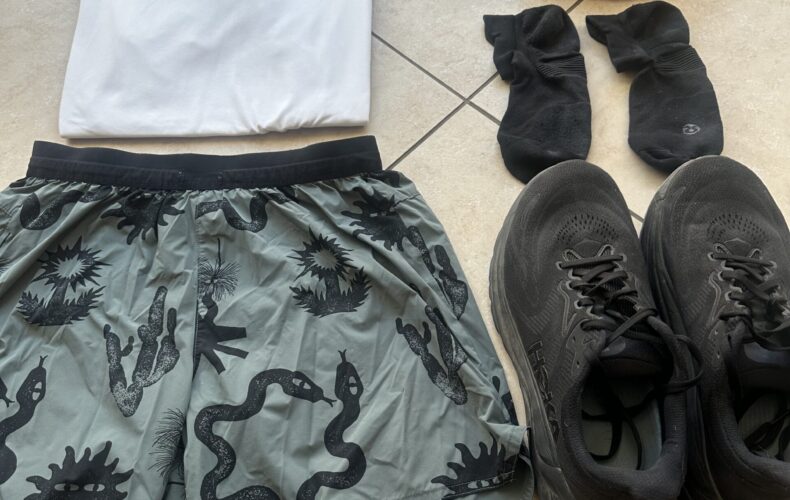
1) Lay out your workout clothes and shoes so they are ready for you. Add your workout to your calendar-maybe as a repeating event.

2) Stock your fridge with healthy snacks in position them in plain sight. Then hide the unhealthy snacks in hard to access places (or toss them out)!

Train Smart. Smile Often.
—Rich Roe
Half His DNA: Longevity

Half His DNA: Longevity

My father is 85 years old.

He was a collegiate soccer player.

A national champion in 50-over squash doubles.

A fierce competitor in volleyball and ping pong.

He’s traveled around the world — twice.

He lived boldly, competitively, fully.

If there was a game being played, he wanted in.

I grew up watching that.

And I share half his DNA.

Today, his body doesn’t always cooperate the way it once did. He can’t participate in the sports he loves. He falls a lot and sometimes ends up in the hospital.

He becomes weaker each time. With his strength declining, he is trapped in a vicious cycle.

He often talks about “the arc of life”, and he understands where he is — and his trajectory.

While you can get stronger at any age, you should be training long before you are feeble. At this point, my dad’s options are limited.

But when he tells stories about a match, a trip, a comeback — his eyes still light up.

The competitor is still there.

And every time I see him, I’m reminded of something powerful:

Longevity isn’t just about how long you live.

It’s about how long you stay in the game.

My father loved to compete.

He didn’t love to train.

When the games slowed down, so did the stimulus that kept him strong.

Most of us love the reward more than the preparation.

But here’s what I’ve learned over forty years of coaching:

The preparation is what protects the later chapters.

Strength isn’t just for sport.

Muscle isn’t just for aesthetics.

Balance isn’t just for athletes.

They’re insurance policies for independence.

I share his genetics.

I’ve inherited some of the same cholesterol patterns. I carry some other risk factors.

I also have a similar competitive drive.

But I’ve made one small shift:

I train even when I’m not competing.

I lift when there’s no trophy.

I practice balance before I “need” it.

The research is clear, we need muscular strength to thrive in our later years.

I want to honor what he gave me — and extend it.

Genetics may set the starting line.

Daily habits influence how far we go.

That’s why I’m writing this book.

After four decades of coaching, I’ve seen something over and over:

You can’t control everything.

But you can control more than you think.

Being strong is a choice you can make.

The Takeaway:

-Get on a strength training program today.

-2 x week for 20 minutes will make a difference.

Train Smart. Smile Often

— Rich Roe

P.S. You are one of my founding members, and I really appreciate you being here early.

If you know someone who might enjoy this, please forward.

Join the Abs to Zen Newsletter
One Minute Miracle: Meditation

One Minute Miracle: Meditation

“You should sit in meditation for twenty minutes every day—unless you’re too busy; then you should sit for an hour.”

— Old Zen adage

I’ll be honest—I’ve never sat for an hour.

When I started, I couldn’t even make it five minutes!

My brain was chaos. Thoughts bouncing everywhere. My body wouldn’t cooperate either—I’d fidget, adjust, check the time… anything but sit still.

And mentally? Worse.

I learned to meditate near the end of my first marriage, hoping it would reduce my stress. Instead, the second I got quiet, everything I had been avoiding came rushing in.

Not exactly peaceful.

But here’s what I eventually realized:

Meditation doesn’t clear my mind, it helps me sort it out.

There’s always noise in there—past regrets, future worries, random mental chatter. Left alone, my brain will happily run through 1,000 imaginary scenarios about conversations that haven’t happened yet.

So instead of trying to solve every possible future situation, I shift the question:

👉 Not “What should I say?”

👉 But “Who do I want to be?”

What works for me is to be:

         •        Kind

         •        Compassionate

         •        Generous

If I show up that way, I don’t need to script the conversation. The words take care of themselves.

So, I sit myself down, close my eyes, and breathe. At first, I just focus on the air moving in and out slowly. I notice how busy my thoughts are. Then I think of kindness, generosity and compassion.

Usually, one of these concepts comes to the front, and I try to do ten more slow breaths as I focus on that principal. I’m still amazed at how much my mindset can shift in just a minute or two.


🎯Your Takeaways

         •        Start with one minute (how about right now?)

         •        Sit and breathe—don’t fight your thoughts

         •        Gently come back to: Who do I want to be right now?

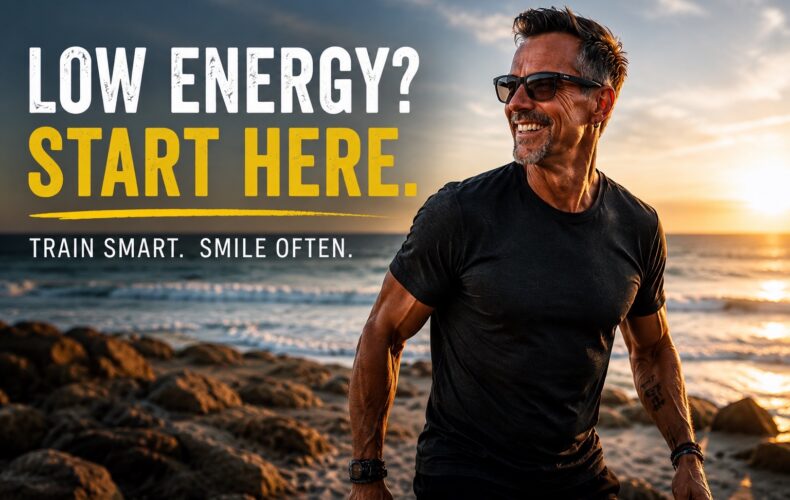
Low Energy? Start Here!

Low Energy? Start Here!

Wouldn’t it be amazing if you could flick a switch and turn on your energy?

We all have those moments where we feel like we are just dragging through the day. You might be able to blame it on a poor night’s sleep, but sleep isn’t the only thing that affects your energy. Stress, dehydration, poor nutrition, inactivity and even spending too much time indoors can all contribute to feeling “off”.

Fortunately, we all have resources within our own bodies that we can tap into.

While we don’t have an actual on/off switch, understanding how to communicate with our body gives us strategies we can use.

Energy is heavily influenced by the nervous and endocrine systems. These systems regulate chemical messengers like hormones and neurotransmitters that affect things like alertness, motivation, mood, stress and recovery.

You don’t need to know how the body functions behind the scenes. What’s important is what you can do to regulate your energy in a healthy and consistent way.

Maybe you want to get to your workout after a day at the office…and still have energy left to enjoy time with your partner, family or friends when you get home.

👉 Rich’s Reality

My day begins with a coffee. I’ll save the full caffeine chat for another newsletter, but a cup a day in the morning with my breakfast gets me going. If I’m tired later in the day, I look for alternate pick-me-ups.

First, I make sure my body’s basic, physical needs are met. Water and food are top of the list. If either of these is lacking, I take care of them right away.

Then comes the emotional component. Is something weighing on me? For that, I have a few tools: meditation, journaling, or reaching out to a friend for advice.

If none of those things work, and I’m searching for inspiration, then I go through what has helped in the past. I usually turn on some motivating music, like “Thunderstruck” from AC/DC, and that gives me a boost. I try to remind myself how good I’ll feel after (I always do), and that motivates me a little more. Then I might focus on my goals: an upcoming Grand Canyon hike, being a grandfather, maximizing life… That does it for me.

You have your own drivers. Have several at your disposal and use them.

🎯 Your Takeaways

1) Scan & Solve: Dehydrated? Drink. Low on calories? Eat.

2) Pause and Pivot: Stressed? Meditate 60 seconds. Stagnant? Get up and move. Better yet, find some fresh air and sunshine.

3) Activate Your Energy Switch: Find what gets you going-and get after it!

Train Smart. Smile Often.

—Rich Roe
PS: I’m relying on you to spread the word. Please share with 1 person today.

Join the Abs to Zen Newsletter